AI isn’t just changing business. It’s quietly rewriting the rules of cybercrime too. Most companies are still playing defense like it’s 2015.
We’re now dealing with AI cyber threats that don’t just attack. They learn, adapt, and come back smarter. Deepfake scams that sound like your CEO. Phishing emails that feel weirdly personal and automated attacks that don’t sleep.
This guide is all about AI threats in cybersecurity and what’s really happening and what you can do about it. If you’re responsible for a business, tech stack, or even just your own data, this matters.
Why AI Cyber Attacks Are Growing Quickly?
Cyber threats have always existed. But AI changed the scale and speed. AI cyber threats use machine learning to automate attacks, mimic human behavior, and adapt in real time. That means attackers don’t need to manually test vulnerabilities anymore. They let AI do heavy lifting.
And the uncomfortable truth is, the barrier to entry is lower than ever. Tools that were once advanced are now accessible to pretty much anyone with decent intent and a laptop.

You’re seeing a rise in:
- AI phishing attacks that analyze your writing style
- Cybercrime automation scanning thousands of systems at once
- Next-gen cybersecurity risks that evolve mid-attack
According to IBM’s Cost of a Data Breach Report, costs keep rising and AI is accelerating that trend.
Quick Reality Check — Why This Matters
- Attack speed > human response speed
- AI can test thousands of attack paths instantly
- Small businesses are now just as vulnerable as enterprises
How Deepfake & AI Phishing Attacks Really Work?
Deepfake scams aren’t sci-fi anymore. There was a real case where attackers used AI-generated voice to impersonate a CEO and convince an employee to transfer money. It worked without any hacking but need just manipulation.
AI phishing is worse in some ways. These emails don’t look fake anymore. They’re clean, context-aware and sometimes they reference real conversations pulled from public data.
So, let’s see what’s happening behind the scenes.
- AI scrapes LinkedIn, emails, company websites
- It builds a “profile” of targets
- Then generates hyper-personalized messages
What Makes These Attacks So Effective
- No spelling errors (finally right?)
- Emotional triggers (urgency, authority, fear)
- Perfect timing (end of day, busy hours)
Red Flags You Shouldn’t Ignore
- Requests involving urgency + money
- Slight tone mismatch (feels off, but you can’t explain why)
- Requests that bypass normal processes
How AI Attacks Expose Business Vulnerabilities?
In multiple enterprise cyber incidents, attackers used AI tools to:
- Automate ransomware deployment
- Identify high-value data faster
- Avoid detection systems entirely
There was a healthcare breach where attackers mapped the system before launching the attack. That’s not random but calculated. And the thing people underestimate, AI fraud isn’t just about stealing data. It’s about disrupting operations.
Common Patterns in AI Fraud Cases
- Multi-stage attacks (phishing → access → escalation)
- Silent data exfiltration before detection
- Attacks timed for maximum disruption
Business Impact (Real Talk)
| Impact Area | What Actually Happens |
| Financial | Direct loss + recovery costs |
| Operations | Downtime, halted services |
| Reputation | Customer trust drops fast |
| Legal | Compliance penalties |
Cybersecurity isn’t IT anymore. It’s business survival.
Why Are Traditional Cybersecurity Systems Failing Against AI?
Most legacy systems rely on known threat signatures. Basically, they detect what they’ve seen before. But AI threats don’t repeat and they evolve. That’s a problem. There’s also the cybersecurity skills gap. They do not have enough experts, training and time.
Where Traditional Security Breaks Down
- Can’t detect unknown threats
- Slow response times
- Over-reliance on human intervention
Signs Your System Is Outdated
- Alerts come after the damage
- No behavioral monitoring
- No automation in response
It’s like locking your door but leaving the windows wide open.
How AI Cybersecurity Tools Actually Work?
AI security tools don’t just react, can also predict. They analyze behavior, not just signatures. In cybersecurity, AI works properly.
For example:
- A system logs in from Dhaka then suddenly from Europe 2 minutes later
- That’s impossible traveling flagged instantly
That’s behavioral threat detection in action.
Core AI Security Capabilities
- Pattern recognition across massive datasets
- Real-time anomaly detection
- Automated containment of threats
Popular Tools Businesses Are Using
- Darktrace (AI-based anomaly detection)
- CrowdStrike Falcon (endpoint protection)
- Microsoft Defender for Endpoint
Why Zero Trust Security Is a Big Deal Today?
Zero Trust sounds interesting, right? That means do not trust always in AI. You must verify before work. It’s a good idea before using AI. Even if someone is inside your network, they don’t get automatic access.
How Zero Trust Works
- Continuous identity verification
- Device-level validation
- Access based on behavior + context
Core Principles
- Least privilege access
- Assume breach mentality
- Continuous monitoring
With remote work and cloud systems, the perimeter is gone. Zero Trust replaces it.
How Companies Earn Trust in AI Security?
Security isn’t just about stopping attacks. It’s about trust. For a business or company, security is the priority. They want to secure all the data of the employee and business. And now AI can do that. Using AI security, a company can relieve danger.
What Businesses Should Focus On
- Data security compliance (GDPR, ISO 27001)
- Ethical AI usage
- Transparent reporting
Practical Steps
- Regular audits
- Employee training programs
- Clear incident response plans
Quick Checklist
- ✔ Conduct third-party security audits
- ✔ Train employees quarterly
- ✔ Maintain compliance documentation
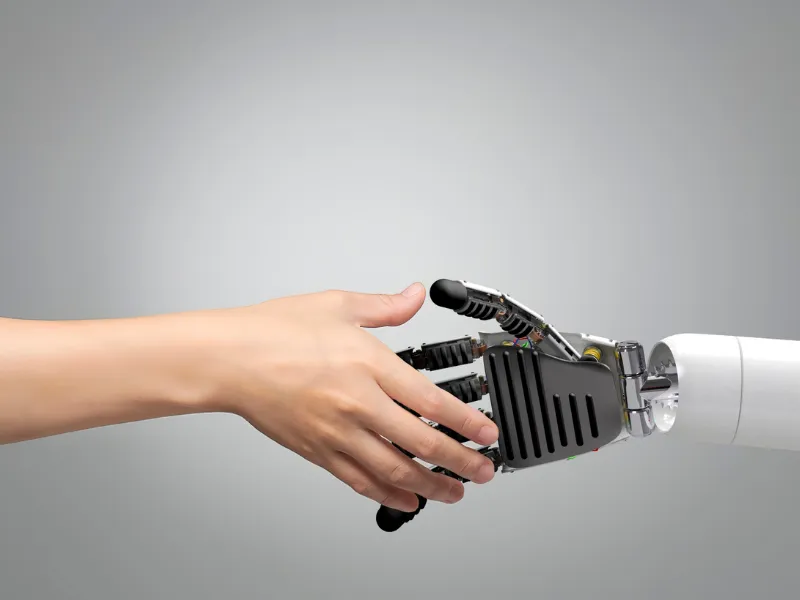
Trust takes years to build. One breach can wreck it.
Why Businesses Need Predictive Cybersecurity?
Reactive security is dead. Predictive cybersecurity uses data to anticipate attacks before they happen. It’s a pattern of recognition at scale.
How It Works
- Analyze historical attack data
- Identify patterns
- Predict future vulnerabilities
Business Benefits
- Reduced breach risk
- Faster response times
- Better resource allocation
Strategy Shift
| Old Approach | New Approach |
| React to attacks | Predict attacks |
| Manual response | Automated response |
| Static defenses | Adaptive systems |
This is where the industry is heading fast.
What Are the Biggest Future Risks in AI Cyber Warfare?
We’re already seeing early signs of autonomous cyber-attacks systems that operate independently. Then there’s AI cyber warfare at the national level. Governments invest heavily in offensive capabilities.
Emerging Risks
- AI-generated malware that rewrites itself
- Model poisoning attacks
- Deepfake identity systems
What Businesses Should Prepare For
- More sophisticated attacks
- Faster attack cycles
- Increased regulatory pressure
How Companies Can Future-Proof Cybersecurity?
Stop thinking of cybersecurity as just IT. It’s business strategy now.
Core Elements of a Strong Strategy
- AI-driven security tools
- Zero Trust architecture
- Continuous monitoring
Expert Checklist
- ✔ Implement AI-based detection tools
- ✔ Adopt Zero Trust framework
- ✔ Train employees regularly
- ✔ Conduct penetration testing
- ✔ Invest in predictive analytics
Conclusion
AI-driven threats are faster than most defenses. Businesses must rethink cybersecurity now. By combining AI-powered tools, zero trust models, and predictive strategies, companies can stay resilient and trusted. This AI treats guide brings together practical insights and proven approaches to help you make smarter, future-ready security decisions.
FAQs
What is AI cyber threats?
AI cyber threats are attacks that use artificial intelligence to automate, adapt, and scale cybercrime activities.
Why are AI attacks more dangerous?
Because they evolve in real time, operate faster than humans, and can bypass traditional security systems.
What is Zero Trust security?
A model that requires continuous verification of users and devices, assuming no entity is automatically trusted.
How can businesses protect themselves?
By adopting AI security tools, training employees, and implementing predictive cybersecurity strategies.