You’ve probably had that thought, is AI going to replace? Basically, AI won’t directly take your job. But someone using AI might. The safest path is learning how to work with AI, not against it, while doubling down on human skills like decision-making, creativity, and communication.
But what’s really happening is more subtle and way more important to understand. Recently most of the tasks shifted in AI progress. Even developer’s task is also done by AI. But one thing is true and that is, AI never does the creativity. It’s only the skill of human brain.
In this guide we will explain how not to lose your job to AI, the AI progress and future job. It’s not fearmongering either, it’s a real, practical breakdown of how to stay relevant, useful employed in an AI-driven world.
Is AI Changing Your Job in 2026?
AI job disruption doesn’t mean robots suddenly taking over entire industries overnight. It’s slower, sneakier like your tasks getting chipped away one by one. A report from the World Economic Forum suggests that while millions of jobs may be displaced, even more will be created but with completely different skill requirements. So, jobs aren’t just disappearing.
What’s changing:
- Tasks, not whole jobs, are being automated
- Roles are becoming hybrid (human + AI collaboration)
- Employers now value adaptability over experience
You might still have the same job title in 3 years. But the way you do that job is totally different.
Which Jobs Are at Risk of AI Replacing Jobs Today?
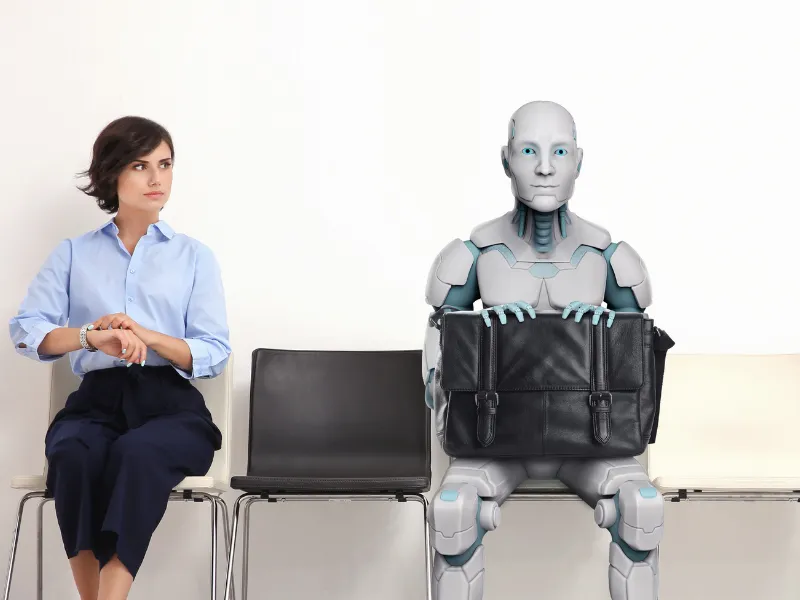
Some roles are way more exposed than others. Jobs that rely heavily on repetition, rules, and predictable outputs are already being automated. It did not fully go but shrink fast. A McKinsey study highlights about the job that up to 60% of jobs have at least 30% automatable tasks.
Most at-risk roles right now:
- Data entry and admin processing
- Basic customer support
- Transcription and simple content writing
- Routine accounting tasks
- Entry-level coding (yes, even this)
But here’s the twist most people miss, it’s not the job, it’s the version of the job. A marketer who only writes blog drafts that replaceable. And a marketer who uses AI + strategy + analytics. Not so much.
AI vs Humans Jobs: What Can Humans Do Better?
This is where things get interesting. AI is fast but it’s also kind of dumb in certain ways. It doesn’t understand but it predicts. And that gap is your opportunity. I’ve personally tested AI tools for writing, research, even decision-making. They’re helpful but still need direction, judgment and context.
Where humans still win:
- Emotional intelligence (reading people, not data)
- Ethical decisions (AI doesn’t care you should)
- Creativity rooted in real experience
- Strategic thinking in messy situations
People underestimate this. Because these skills don’t feel technical but they’re becoming the most valuable ones. Research from MIT shows that human judgment and contextual understanding remain critical where AI lacks real-world awareness.
What Skills Will AI Never Replace?
If you’re thinking, what should you learn, then here’s the real answer. Not just learn AI, that’s too vague. You need a skill stack. So, think of it like layers. The OECD emphasizes that social, emotional, and cognitive skills are becoming increasingly valuable in an AI-driven economy.
Human + AI Skill Stack Model
| Layer | Skill Type | Examples |
| 1 | Core Human Skills | Communication, critical thinking |
| 2 | AI Literacy | Prompting, tool usage |
| 3 | Applied Skills | Marketing, coding, design |
| 4 | Strategic Layer | Decision-making, leadership |
Skills that AI struggles to replace:
- Critical thinking under uncertainty
- Creativity with emotional depth
- Persuasive communication
- Cross-disciplinary thinking
And this part matters more than people think, learning how to learn is the real superpower now. AI is not replacing all job sectors. But AI can make tasks easy and fast. But can not replace all the tasks. AI is never thought. Thinking is only power of humans that machine cannot do.
How to Use AI Tools for Productivity at Work?
Let me give you something practical here. Because using AI is easy to say and harder to dowell. I started using AI tools daily about a year ago. At first, it felt clunky. But now it’s like having an assistant that never sleeps.
Simple AI workflow you can copy:
- Define task (writing, research, analysis)
- Use AI for draft/output
- Refine with human judgment
- Add originality + context
Top AI Tools Worth Learning
- ChatGPT (content, brainstorming)
- Notion AI (workflow + notes)
- Midjourney (design)
- Grammarly AI (editing)
- Zapier (automation)
Prompt tip:
Instead of,
“Write about marketing”
Try:
“Write a 500-word blog post for beginners explaining email marketing with examples and mistakes to avoid.”
Better input = better output.
AI chatbot helps people to make their work easy and fast. OpenAI can solve your problem within a second. Image generates, or submitting any file you can do anything from it. You will be happy to hear this, claude is another chatbot that like more effective than openAI.
Yes, that’s right. OpenAI and Claude both are chatbot but claude is more powerful day by day. Even it replaces developer also. Because it generates full code according to the instructions and that’s why developers are also AI dependent.
What Are the Best Career Strategies in 2026?
The people doing well right now aren’t just skilled. They’re adaptable and visible.
Future-Proof Career Checklist
- Learn one AI tool deeply
- Build a public portfolio (LinkedIn, blog, etc.)
- Stack skills (don’t rely on one)
- Stay updated weekly (not yearly)
- Explore side income streams
I’ve seen people ignore personal branding thinking it’s cringey. Then 2 years later they’re invisible. Meanwhile others with half the skill but strong presence getting opportunities.
What Career Mistakes Make You Replaceable?
This part might sting a little but it’s important. Most people won’t lose jobs because of AI. They’ll lose them because they ignore change.
Common Mistakes:
- Sticking to outdated tools
- Avoiding AI completely
- Not learning anything new for years
- Doing only low-value repetitive tasks
And the biggest one is waiting too long. By the time it feels urgent, it might already be late.
Real-Life AI Success Stories
A freelance writer was struggling last year with low-paying gigs. Then she started using AI, not to replace her work, but to speed it up.
Now,
- Writes 3x faster
- Focuses on strategy + editing
- Charges of higher rates
Same person, same skill but different approach.
What successful people are doing:
- Using AI as leverage, not crutch
- Upskilling continuously
- Shifting toward higher-value tasks
How to Adapt and Thrive in the AI Era?
Staying relevant isn’t about one big move. It’s small, consistent ones.
Resilience Habits That Actually Matter:
- Learn something new every week
- Experience with tools
- Talk to people in your industry
- Stay curious (seriously underrated)
Some days you won’t feel like doing it. That’s normal but consistency beats intensity here.
How to Thrive in the Future AI Economy?
AI isn’t just changing jobs but it’s changing value.
People who combine:
- Human insight
- AI tools
- Strategic thinking
Best Career Directions:
- AI-assisted marketing
- Product management
- UX/UI design
- Data + storytelling roles
- Consulting / strategy
You don’t need to become a developer, just need to become adaptable.
Conclusion
AI isn’t here to erase careers but it’s reshaping them. Data from the World Economic Forum and McKinsey shows roles evolving, not disappearing. The advantage goes to those who adapt build human skills, learn AI tools, and stay curious. There’s no fixed safe job, only a flexible mindset. Keep learning, keep experimenting and you won’t just survive, you’ll stay valuable.
FAQ
Will AI replace my job?
Not fully, but it will change how your job works.
What are safest jobs from AI?
Jobs require creativity, empathy, and decision-making.
How to survive AI takeover?
Learn AI tools + develop human skills.
Best careers in AI future?
Hybrid roles combining tech + human insight.